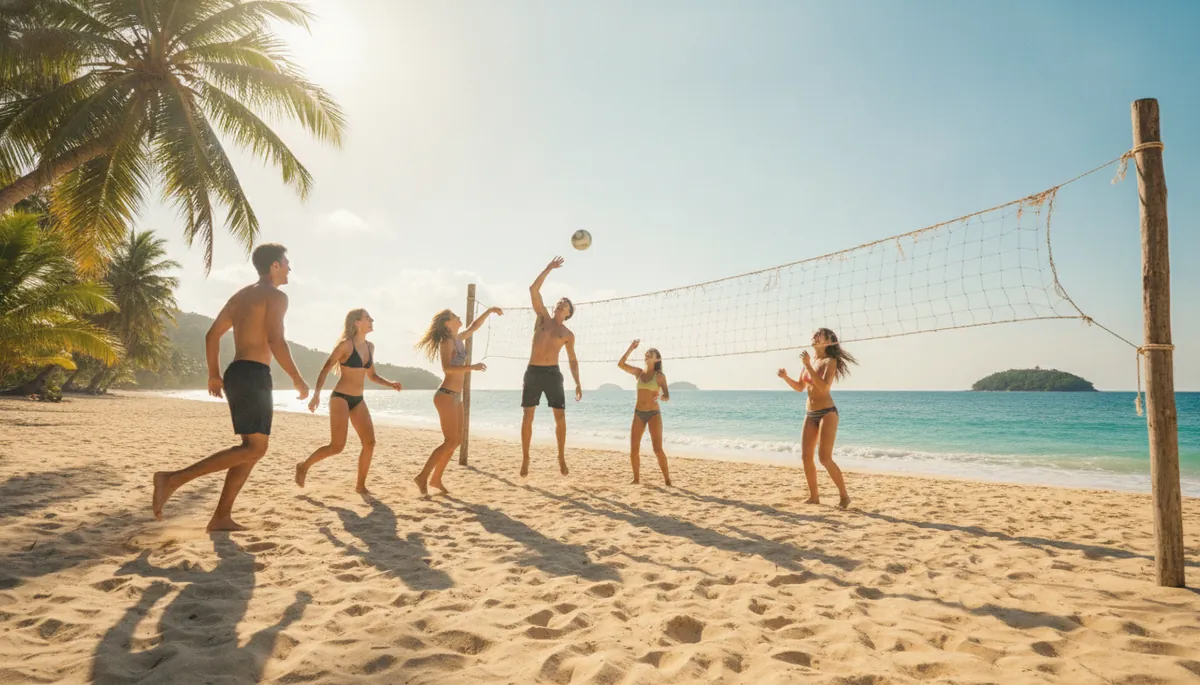
Pairing English with an activity you love turns study into something you actually look forward to - and real-world use cements the language. Sports & English programmes combine structured lessons with physical activity, giving you a reason to speak outside the classroom. Whether you're a beginner or advanced, these programmes help you build fluency in a natural, enjoyable way.
Why combine sports and English?
Learning English through sports is effective because it creates real-life situations where you must communicate quickly and naturally. On a surfboard, in a diving group, or on a tennis court, you practice instructions, teamwork, and small talk - all essential language skills. This approach makes you more confident and helps you remember vocabulary longer through physical association.
- Immersive practice: you use English in practical, high-energy settings.
- Motivation boost: daily activities keep you excited about learning.
- Social benefits: meet like-minded students from around the world.
- Holistic growth: improve your fitness and language skills simultaneously.
What are the most popular sport and English combinations?
Depending on your destination, you can choose from a variety of activities. Here are the most common combinations:
- Surfing and English in coastal areas like Siargao (Philippines) or Bali.
- Diving and English in places with clear waters like Cebu, Mactan, or Malta.
- Tennis or golf academies with English lessons in warmer climates like Cebu or Clark.
- Football or basketball camps partnered with language schools, often in UK or Australia.
- Yoga and wellness retreats that include English classes, found in many destinations.
Each destination offers a unique balance of cost, intensity, and activity quality.
Where can you study sports and English?
Coastal destinations for water sports
For surfing and diving, warm coastal areas are ideal. In the Philippines, Cebu and Mactan offer diving, while Siargao is famous for surfing. Australia and Malta also have strong programmes that pair sea sports with reputable English schools. These destinations often have reliable weather, making it easy to schedule lessons around your sport.
Inland academies for golf or tennis
If you prefer golf or tennis, look for resorts with dedicated sports facilities. The Philippines has options in Baguio and Clark, while cities like Bangkok and Cape Town also offer such programmes. These academies typically provide professional coaching and flexible lesson times.
How to decide the best location for you
Consider cost, travel time, and the intensity of the sports programme. The Philippines offers all-in packages at $900-$1,400 per month including tuition, private room, and three meals per day - around $31 per day - making it one of the most affordable. In contrast, Australia or the UK may charge higher fees for similar combinations, but offer different cultural experiences.
How much does a sports and English programme cost?
Costs vary widely by destination and programme structure. In the Philippines, an all-in package (tuition, private room, meals) ranges from $900 to $1,400 per month, which typically includes 4-8 one-to-one English lessons daily. In Australia, a similar programme might cost $1,500 to $2,500 per month excluding meals. UK and Malta fall in between, around $1,200 to $2,000 per month. Always ask what's included - lessons, equipment, and sports coaching fees can be extra.
How many English lessons are included per day?
The number of daily lessons is a key factor. In the Philippines, most schools offer between 4 and 8 one-to-one sessions per day, alongside your sports activity. That means you get intensive language practice without sacrificing your favourite sport. In other countries, group lessons are more common, often 2-4 hours per day. If one-to-one coaching is important to you, the Philippines is exceptional value.
Will I need a visa or study permit?
For short language courses in the Philippines (under 59 days), you only need a tourist visa, and you can apply for a Special Study Permit (SSP) which the school arranges - costing around $100-$200. After 59 days, you'll need an ACR I-Card (about $50-70) which is also facilitated by the school. Note that a 9(f) student visa is not required for language courses. In other countries, like Australia or the UK, you may need a student visa which can cost more and require additional paperwork. Always check the latest entry requirements.
Are there family-friendly sports and English programmes?
Yes, many schools welcome families. In the Philippines, some schools offer kids' groups starting from age 3-4, while parents can take adult lessons. Compare this with sports camps in Europe that may have age limits, making the Philippines a good option for young children. Family programmes often include a mix of sports and English for all ages, with family-friendly accommodations.
How to choose a programme that fits your sport and level
To find the right fit, consider the following steps:
- List your sports priorities - do you need ocean access or a golf course?
- Decide how many hours of English you want daily - more if you're serious about improvement.
- Check the school's facilities and equipment to ensure they match your skill level.
- Read reviews from other students who did the same combination.
- Ask about included extras like airport pickup, sport insurance, and field trips.
For example, if you're a beginner surfer, a school that offers beginner boards and calm beaches is better. For advanced golfers, a course with a pro shop and varied terrains is key.
What are the benefits of one-to-one English lessons in sports programmes?
Many sports and English programmes include one-to-one lessons which are highly personalized. With a private teacher, you can focus on sports vocabulary, practice common phrases used in your activity, and get immediate feedback. This accelerates your learning compared to group classes. In the Philippines, one-to-one lessons are standard, giving you up to 8 per day at no extra cost. That's why many students choose the Philippines for intensive learning.
Can I also take professional or family English courses?
Yes, many schools offer specialized programmes that can be combined with sports. For instance, professional English courses might be paired with golf or tennis for business travellers. Similarly, family English programmes often include supervised activities for kids while adults enjoy sports. These combinations allow you to meet both personal and professional goals.
What should I expect in terms of daily schedule?
A typical day might start with a morning English lesson (e.g., 2-3 hours), followed by a break and lunch, then your chosen sport session in the afternoon (2-3 hours), and an evening social or self-study. In the Philippines, you'll have 4-8 one-to-one lessons, usually in the morning and early afternoon, leaving late afternoon free for sports. This structure ensures you practice English both in class and in the field.
Choosing the right destination for your budget
If affordability is key, the Philippines is unbeatable. With 23 schools across Cebu, Mactan, Baguio, and Clark, you have many options for sports and English. For diving, Cebu and Mactan are excellent; for mountain sports, Baguio offers cooler air and hiking. Preparing your budget? Remember that in the Philippines, the SSP costs $100-$200 and is arranged by the school, plus a possible ACR card fee after 59 days. Elsewhere, visas and insurance can significantly raise costs.
Comparing schools alone is hard, but getting a free match from our service simplifies it. Get a free, no-mark-up school match - we'll pair you with a school that fits both your sport and budget, and Julia has personally visited the campuses to ensure quality. We explain how to handle enrolment and the SSP, so you can focus on surfing, diving, or perfecting your swing - while your English improves faster than you thought possible.