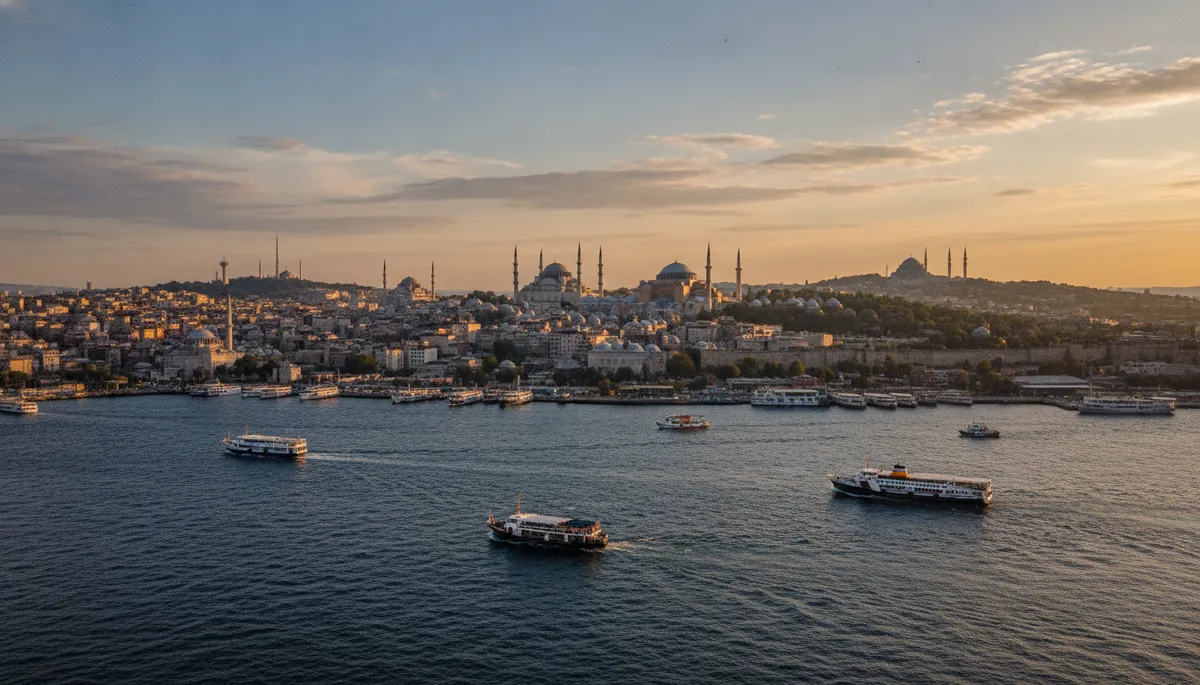
These markets can offer real savings and convenient access for nearby learners, but they are less regulated than the established hubs.
Why Türkiye, Egypt, and Japan as emerging destinations?
English learners increasingly look beyond the usual suspects (UK, US, Australia) to cut costs and combine study with cultural exploration. Türkiye bridges Europe and Asia, Egypt offers affordability and history, and Japan appeals with its modern, safe environment. Each has genuine advantages, but also distinct risks.
Here is a realistic look at what you can expect in each - prices, visa rules, and quality - plus how to decide if one fits you.
What are the typical costs in Türkiye, Egypt, and Japan?
Prices vary hugely by city and school type. In Istanbul or Cairo, a 4-week intensive group course (20 lessons/week) can cost $200-500. In Tokyo or Osaka, the same course runs $1,000-2,000 due to higher living costs and wages. One-to-one lessons in Egypt may be $5-10 per hour, in Türkiye $10-20, and in Japan $30-50.
How do visa rules affect your stay?
- Türkiye: Tourist e-visa for many nationalities allows up to 90 days in 180 - enough for short courses. Longer study requires a student residence permit, which needs a school acceptance letter.
- Egypt: Tourist visa on arrival for many, valid 30 days. For courses under 90 days, you may stay as a tourist, but for longer, a student visa is required - processing can be slow.
- Japan: Strict; a tourist visa does not permit study. You need a Student visa (for courses over 90 days) or a Cultural Activities visa for short-term. Sponsorship by a school is mandatory, and paperwork is rigorous.
What are the risks when choosing an emerging destination?
Unlike the Philippines or the EU, these markets lack a consolidated quality-assurance body. Here are the top risks:
- Teacher qualifications: Not all teachers hold CELTA or equivalent. Ask for CVs and observe a trial class.
- Accreditation gaps: Fewer independent inspections; schools may advertise 'native speakers' who are not trained.
- Cultural and practical barriers: In Egypt, female travelers need to consider dress codes; in Japan, the cost of living is very high; in Türkiye, political tensions occasionally affect protests.
- Refund policies: If a course disappoints, you may have little recourse.
How to choose a safe school in these destinations?
If you decide on Türkiye, Egypt, or Japan, do not rely on glossy websites. Follow a checklist:
- Verify accreditation: look for national or international bodies (e.g., British Council, EAQUALS if present).
- Talk to former students via independent forums (Reddit, Trustpilot).
- Inspect teacher qualifications: ask for a sample of CELTA/TEFL certificates.
- Insist on a trial lesson before paying the full amount.
- Check visa rules with the embassy, not the school.
Are there any advantages over the Philippines?
The Philippines remains the dominant value-for-money destination in Asia, with all-in packages (tuition + private room + 3 meals) at $900-1,400 per month, about $31 per day, and 4-8 one-to-one lessons daily. In contrast, these emerging destinations generally offer group classes at a lower intensity, and Japan is much more expensive. If your priority is maximum speaking practice and structured support, the Philippines offers a proven system.
Then why consider Türkiye or Egypt?
For learners in the Middle East, Europe, or Africa, Türkiye and Egypt are cheaper to reach, often with low-cost flights and no jet lag. If you want to study a few hours a day and then explore Istanbul's bazaars or Cairo's pyramids, these are beautiful - but check the school thoroughly. Japan, however, is a better choice for those seeking a safe, first-world environment and who value the 'study hard, play hard' ethos, but at a premium.
What is the verdict?
Choose Türkiye, Egypt, or Japan if you have a specific short-term goal (e.g., a 1-4 week intensive) and you are ready to vet schools rigorously. For a intensive, one-to-one focused program, the Philippines offers more for your money and a safer, more regulated environment.
If you are torn between an emerging destination and a proven one, comparing schools alone is hard. A specialist who has visited campuses - like our partner - can help you weigh trade-offs at no cost to you. She only works with vetted schools in the Philippines, but can contrast them against Turkish or Egyptian options so you decide with an honest picture. She can advise on enrolment and the SSP permit if you choose the Philippines, and prices are the school's own - no markup.
For more on quality and cost in the Philippines, see our guide to the best English schools and cost breakdown. Also, check English usage in the Philippines for context.
Ultimately, your choice depends on budget, distance, and learning style. For a no-pressure consultation, get a free, no-mark-up school match and talk through your goals with an independent expert.