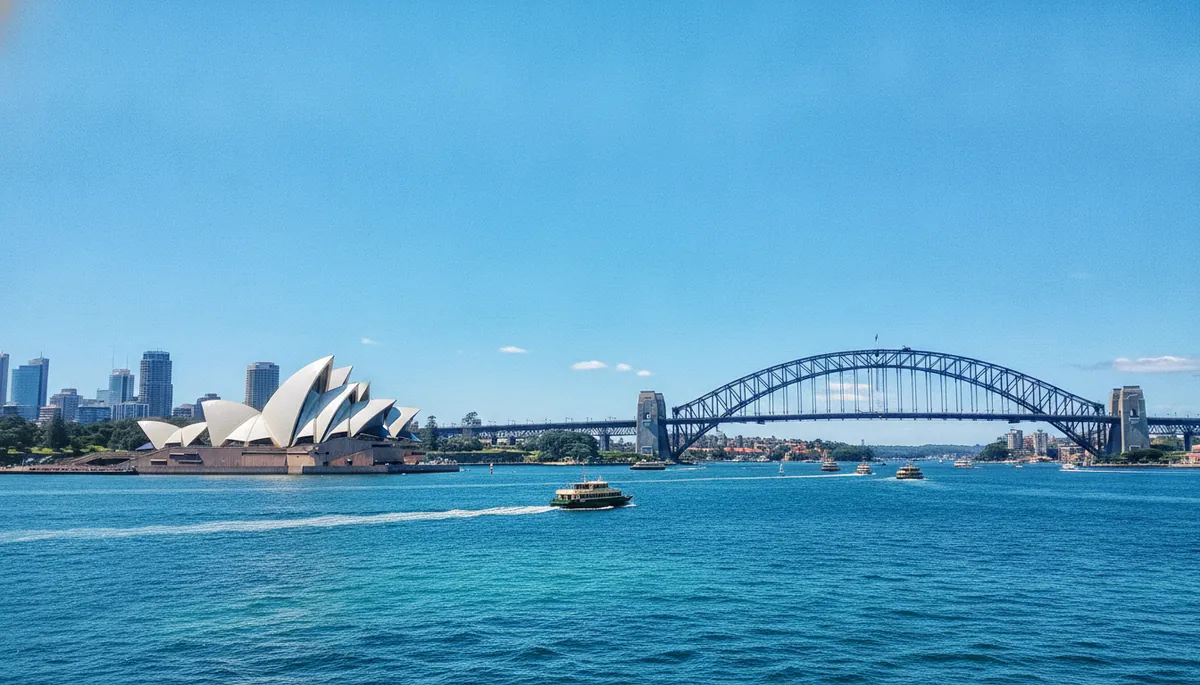
Australia has long been a top destination for learning English, and its English Language Intensive Courses for Overseas Students (ELICOS) program is renowned for quality. But with high costs and strict visa rules, choosing Australia means balancing value and experience. This guide covers the essentials you need to know - from visas and work rights to finding the right school.
Why study English in Australia?
Australia attracts over 100,000 international students for English courses each year. The key draws: a high standard of living, a relaxed culture, and native English speakers with a clear accent. The ELICOS framework ensures consistent quality across accredited schools. Whether you're preparing for academic study, planning to work abroad, or just want to improve your English, Australia offers a solid experience - but you'll pay for it.
What are the main course types and lengths?
General English is the most common, focusing on everyday communication. You can also choose Academic English (EAP) to prepare for university, IELTS/Cambridge test preparation, or English for specific purposes like business. Courses range from a few weeks to a full year. The average student studies for 12-24 weeks. Shorter courses (up to 12 weeks) may be possible on a visitor visa, but most dedicated students opt for longer study to gain a student visa.
Do I need a student visa?
If you plan to study in Australia for more than 3 months, you'll likely need a subclass 500 student visa. This requires you to be enrolled in a CRICOS-registered course, provide a Confirmation of Enrolment (CoE), prove sufficient funds, have Overseas Student Health Cover (OSHC), and meet English language requirements (though many language courses accept a placement test). The visa process can take 4-8 weeks and costs about AUD 710. For courses under 3 months, a visitor visa (subclass 600) might suffice, but you cannot work and must meet genuine visitor requirements. Always check with the Australian Department of Home Affairs.
Can I work while studying?
Yes, but with limits. Student visa holders can work up to 48 hours per fortnight during term time and unlimited hours during scheduled holidays. This is generous compared to many countries, and the Australian minimum wage is high (over AUD 23 per hour). However, finding work can be competitive in major cities. Some students find that earnings cover basic living costs, but it's wise not to rely on that - budget for a comfortable life without depending on part-time jobs.
What does it cost to study English in Australia?
Costs are significant. Tuition ranges from AUD 200 to AUD 450 per week, depending on the city and school. Popular destinations like Sydney and Melbourne are more expensive. Living costs add another AUD 1,000 to 2,000 per month for rent, food, transport, and social activities - more if you like eating out. In total, a 12-week course might cost AUD 10,000-15,000, and a year could hit AUD 30,000-40,000. This puts Australia on par with the UK or Canada but at a level that's hard to justify if budget is your main constraint.
Which Australian cities offer the best experience?
Melbourne and Sydney are the most popular, with huge student communities, diverse activities, and plenty of schools. Brisbane and the Gold Coast are cheaper and offer a more laid-back lifestyle. Perth and Adelaide are less common but still have excellent schools. Each city has a slightly different cost and lifestyle trade-off. The Gold Coast, for instance, is more affordable and great for beach lovers, while Melbourne and Sydney offer more part-time work opportunities.
What is OSHC and why is it mandatory?
Overseas Student Health Cover (OSHC) is private health insurance required for the entire duration of your student visa. It's not optional. Costs vary, but budget at least AUD 500-700 per year for single coverage if paid monthly. You can purchase OSHC from approved providers like Bupa, Medibank, or Allianz. It covers most medical care, but not dental or optical, so consider extras. You must have OSHC before you arrive - it's a visa condition.
How do I choose a quality English school?
With so many options, you need a reliable method:
- Check CRICOS registration: only CRICOS-registered courses can grant student visas.
- Look at quality frameworks: many schools are part of English Australia (the national industry body), which has a strict code of practice.
- Check teacher qualifications: quality schools hire teachers with TESOL or related qualifications.
- Read independent reviews: websites like Google Reviews and language travel forums offer honest experiences.
- Consider the destination: compare city costs and lifestyles using older reviews as a guide.
- Ask about support services: good schools offer academic and welfare support.
You can also look for schools that have earned NEAS endorsement - a globally recognized mark of quality in ELICOS.
What are the hidden costs to plan for?
Even after tuition and living, you'll face extra fees:
- Visa application (AUD 710 +)
- Part of the visa cost includes an education levy for government oversight.
- In addition, students might pay for a placement test (AUD 50-100), textbooks, a uniform, or an orientation fee.
- International student welfare fund is about AUD 150 (non-refundable).
- These costs add up - always ask the school for a complete quote.
Is it worth the money compared to other countries?
Australia offers a fantastic, safe, and culturally rich environment, but its high cost is a real drawback for many. If your main goal is rapid English improvement on a budget, you can achieve impressive results at a fraction of the cost in the Philippines. There, you get 4-8 one-to-one lessons a day, a private room, and three meals for about $900-1,400 per month - literally a few hundred dollars for an entire month's stay. The all-inclusive nature means no surprise fees. If you have a larger budget and would benefit from an English-speaking country's work rights and lifestyle, Australia is a great choice; if maximizing value matters more, consider a two-month intensive in the Philippines first, then a short course in Australia. Many students combine both successfully.
How do I know if a school is right for me?
Ultimately, you have to define your goals - budget, expected outcomes, activities, and lifestyle. Visit the campus if possible, or ask the school to give you a sample timetable and placement test. Ask about class size (averaging 12-15 students in Australia) and how often you get one-on-one feedback. And think about the balance: Australia offers a structured experience, while the Philippines offers intense practice. By weighing these factors, you can make a choice that fits your needs.
Figuring out which school - whether in Australia or the Philippines - fits your needs best is a lot to manage. Comparing schools on your own is time-consuming, but getting a free, no-mark-up school match can help. I personally visit campuses, so you can get honest recommendations. I can advise on enrolment and the SSP if you choose the Philippines - all at the school's own price. Just reach out.