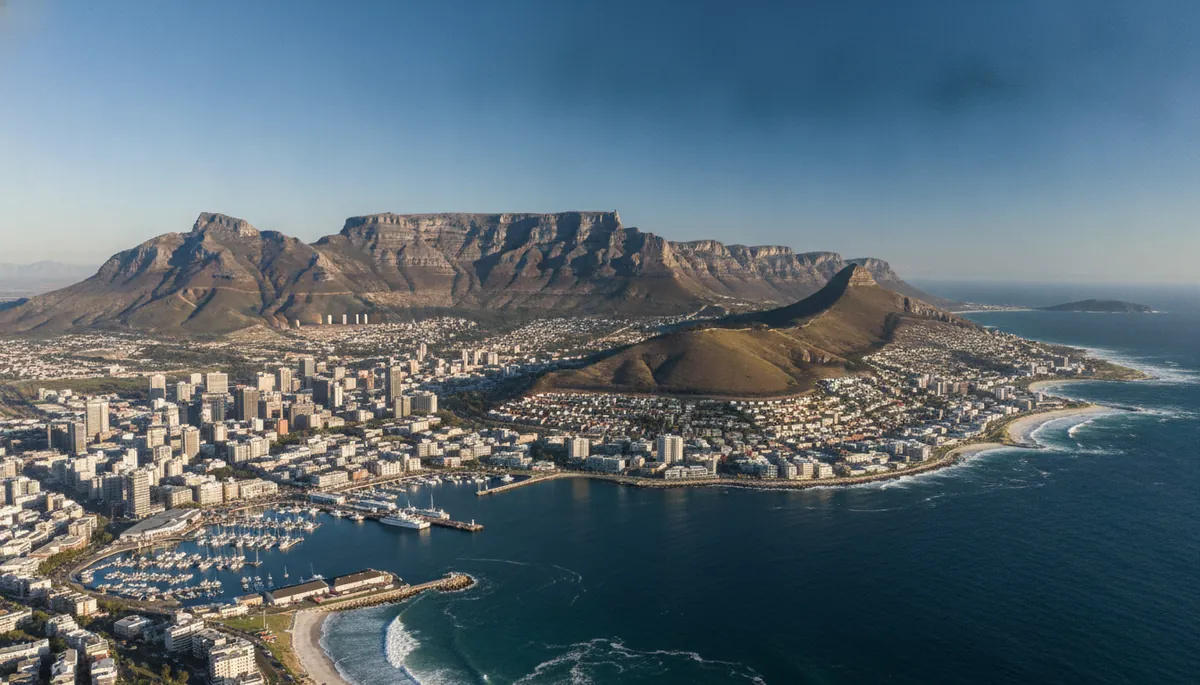
South Africa's mother-city is a favourite for budget-minded learners who also want mountains, beaches and wildlife on the doorstep. Cape Town combines established language schools, a mild Mediterranean climate, and some of the most spectacular scenery on Earth - all at prices well below those in the UK, USA or Australia.
Why study English in Cape Town?
Cape Town offers a genuine English-speaking environment with a distinctive South African accent. You're never far from the classroom to outdoor adventure: Table Mountain looms over the city, while penguins at Boulders Beach, wine farms in Constantia, and great white shark cage-diving are all feasible day trips. Schools here tend to be smaller and more personal than those in Europe's big capitals, with a strong emphasis on conversational practice and outdoor activities.
- Cost-effective tuition: Group lessons cost a fraction of UK or Australian prices.
- Natural beauty: Beaches, mountains, and wildlife are all within easy reach.
- Cultural diversity: Meet students from across Africa and beyond.
What are the costs for English courses in Cape Town?
Weekly tuition costs range from ZAR 3,000 to ZAR 5,000 (€150-250) for semi-intensive courses (around 15-20 lessons per week). Intensive programmes with 30 lessons can reach ZAR 6,000-8,000 (€300-400) weekly. Accommodation adds ZAR 2,500-4,500 per week for a homestay with meals, or ZAR 3,500-6,000 for a student residence or shared apartment. Including meals, transport, and leisure, a realistic monthly budget is €650-1,000, which is 30-50% cheaper than comparable courses in the UK or Ireland.
Typical weekly breakdown
- Tuition (20 lessons): ZAR 3,500 - €175
- Homestay (half-board): ZAR 2,800 - €140
- Local transport and food: ZAR 1,000 - €50
- Weekly total: ZAR 7,300 - €365
Always confirm what's included: some schools offer package deals that bundle tuition, accommodation, and airport transfer, which can save 10-20%.
How do you choose a good English school in Cape Town?
Look for schools accredited by the South African education authorities and international bodies like the British Council or IALC. Check class sizes (ideally small averages of 8-10), teacher qualifications, and the mix of nationalities - a truly international environment prevents you from slipping back into your first language. Read independent reviews on Google and Trustpilot, and ask about trial lessons or refund policies.
- Check whether the school runs placement tests to group you with similar levels.
- Ask about the proportion of one-to-one lessons if you need intensive speaking practice.
- Inspect accommodation options and their locations; ask for photos and references.
Which visa do you need for English study in South Africa?
For courses under 90 days, you can simply use a tourist visa or visa-free stay (many nationalities enjoy 30-90 days visa-free). For studies longer than 90 days, you'll need a Study Visa, which requires an acceptance letter from your school, proof of funds, a medical certificate, and a police clearance. School administrators usually assist with paperwork, but the process can take 4-6 weeks, so apply well in advance. The visa fee is around ZAR 425 (€20) for a short-term visa.
What about safety in Cape Town?
Cape Town has a high inequality rate, and certain areas have crime problems. However, most students study and live without incident if they exercise common sense: stay in areas popular with tourists and students (like Vredehoek, Gardens, or Sea Point), avoid walking alone after dark in isolated spots, and use recognised taxis or rideshare apps rather than informal transport. Reputable schools provide detailed safety briefings and organise social activities in safe environments.
When you arrive, take an official airport shuttle or use a pre-booked transfer from your school rather than hailing an unmarked cab. Always keep your phone and valuables out of sight in public - this is simply routine for any South African city.
How does it compare to learning English in the Philippines?
The Philippines offers all-in packages with 4-8 one-to-one lessons daily, private accommodation, and three meals for roughly $900-1,400 per month, including the SSP study permit (around $100-200). That is unrivalled speaking practice per dollar. Cape Town, by contrast, gives you more classroom group dynamics and a more western cultural environment, but at significantly higher cost per lesson - and you'll get far fewer one-to-one hours. If your priority is intensive spoken English with total immersion and meticulous free enrolment support, the Philippines may suit you better. For an adventure holiday with English classes and spectacular scenery, Cape Town is excellent.
What are the best times of year to study in Cape Town?
The city enjoys a Mediterranean climate: summer (October to March) sees hot, dry weather and is peak tourist season, while winter (June to August) offers mild, wet conditions - still fine for lessons, with lower accommodation prices. If you want to surf or swim, October to April are the best months. Classes run year-round, but you can avoid crowds by starting in February or September.
Practical facts for living in Cape Town
- The currency is the South African Rand (ZAR); most prices include 15% VAT.
- English is the language of instruction and widely spoken, but other official languages include Afrikaans, isiXhosa, and Zulu.
- Voltage is 220-240V, so bring adapters for European or Asian appliances.
- Tipping is customary (10% in restaurants); Uber is cheap and safe.
Whether you choose Cape Town or the Philippines often comes down to your learning style and budget. Comparing schools alone is hard because you need to weigh accommodation, meals, and extras. That's why using a free advisory service can help: you get a no-mark-up school match based on your goals, and enrolment is handled for you seamlessly. Take your time, research thoroughly, and soon you'll be speaking English with confidence - be it under Table Mountain or among the warm waves of the Pacific.
If you're still weighing up your options, cost-to-study-english-in-the-philippines offers a clear comparison against Philippine pricing. For a personal, free consultation with an expert who has personally visited campuses, get a free, no-mark-up school match.