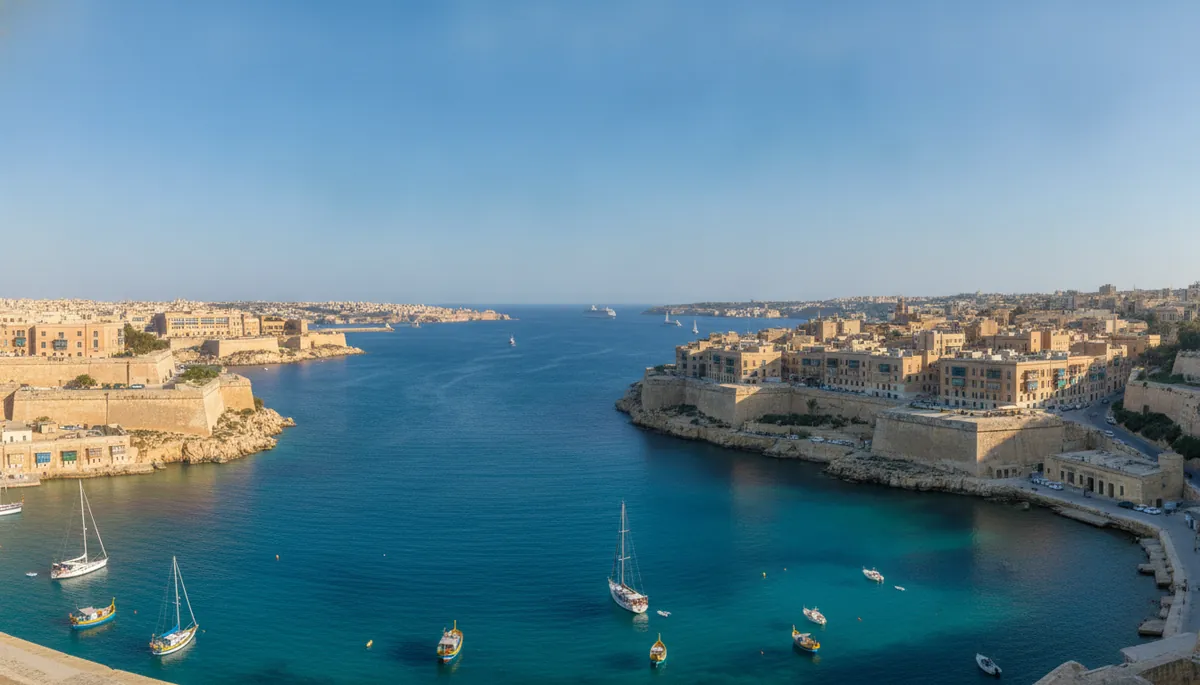
Why choose Malta for learning English?
Malta is a compact Mediterranean archipelago where English is an official language, spoken by nearly the entire population. It combines a sunny island lifestyle with a mature English-teaching industry that is tightly regulated by the European Union. With over 30 licensed language schools, mainly in Sliema, St. Julian's, and Valletta, you'll find a wide range of courses. The international student mix - predominantly European but increasingly global - ensures you'll use English as your lingua franca both in class and during after-school activities.
What is the cost of studying English in Malta?
Budget realistically for your entire stay. Tuition for General English typically costs €180-260 per week, with intensive courses and one-to-one lessons costing more. Accommodation is often the biggest expense: a shared apartment or host family stay can range from €150-300 per week. Meals, local transport, and entertainment add another €200-400 per month. In total, a four-week course with accommodation might set you back €1,500-2,500. Prices peak in summer (June-August) and drop in winter.
Are there hidden fees?
Most schools charge a one-time enrolment fee (€50-100) and a booking fee. You'll also need to budget for travel insurance, visa fees (if applicable), and airport transfers (usually €20-50). Unlike in the Philippines, where the SSP and ACR I-Card are handled by the school (costing $100-200 and $50-70 respectively), in Malta you may need to register with the local authorities if staying over three months, which involves administrative fees.
What accreditation should I look for?
Choose a school licensed by the ELT Council, Malta's official regulator. Look for accreditation by recognised bodies such as the Federation of English Language Teaching Organisations Malta (FELTOM) or international bodies like EAQUALS and IALC. These ensure quality teaching, class-size limits, and consumer protection. For exam preparation (IELTS, Cambridge), check if the school is a registered test centre. Note: in the Philippines, only two schools are official IELTS test centres, but in Malta many schools host exams.
What is the nationality mix and seasonality?
- Summer (Jun-Aug): Busiest and most expensive, with large groups of teenagers from Italy, Spain, and other EU countries. Classrooms are more crowded, and accommodation is tight.
- Shoulder seasons (Apr-May, Sep-Oct): A good balance of pleasant weather, moderate prices, and a mix of adults and juniors.
- Winter (Nov-Mar): Quieter, cheaper, and better for serious adult learners. You'll get more speaking time and smaller classes, though some social activities may be limited.
How many lessons per day can I expect?
Standard courses offer 20 lessons per week (around 4 lessons per day), while intensive courses provide 30 lessons (6 per day). One-to-one lessons are usually available as add-ons, but in Malta, group classes are the norm for general English. If your goal is rapid speaking progress, you might prefer the Philippines, where 4-8 one-to-one lessons per day are standard, giving you personalised attention and up to 8 hours of speaking practice daily.
What about accommodation and meals?
Schools in Malta offer host family stays (half-board or full-board), shared apartments, and residences. Host families are popular for cultural immersion, but meal plans are not as all-inclusive as in the Philippines. In the Philippines, all-in packages typically include tuition, a private room, and three meals a day for about $1,000-1,400 per month. In Malta, you'll pay separately for meals if not included, and eating out can cost €10-20 per meal.
How does Malta compare to the Philippines for value?
Malta is an excellent choice if you want a European cultural experience and a short-haul flight from the UK or mainland Europe. However, for pure language learning value, the Philippines offers significantly lower costs. A month in the Philippines, including private tuition, accommodation, and meals, typically ranges from $900-1,400 - far less than a comparable month in Malta. Moreover, because the Philippines has over 23 schools in Cebu, Baguio, and Clark, you get a focused study environment with dedicated one-to-one classes. That said, if you're on a working holiday or prefer a more cosmopolitan setting, Malta is worth it.
What are the visa requirements?
EU citizens do not need a visa to study in Malta. Non-EU citizens may need a visitor visa for stays under 90 days, but for longer courses you'll require a national visa or residence permit. In contrast, the Philippines offers a simpler process: no student visa is needed for language courses under 59 days, and the school arranges the SSP and ACR I-Card. Always check the latest regulations before booking.
Is a homestay or residence better?
Homestays offer cultural immersion and meals, but quality varies. Residences offer more independence but are often more expensive. For a fully immersive language holiday, consider a study-tour program that includes excursions and activities. If you're a parent with young children, note that some language schools in Malta accept children from age 6, whereas in the Philippines, kids' groups start from age 3-4 in some schools.
Comparing schools alone can be overwhelming. Whether you choose Malta or the Philippines, our guide to the best English schools in the Philippines can help you weigh options. For a free, no-mark-up school match, get in touch - Julia has personally visited campuses and can guide you through enrolment and the SSP, ensuring you get the best value for your budget.