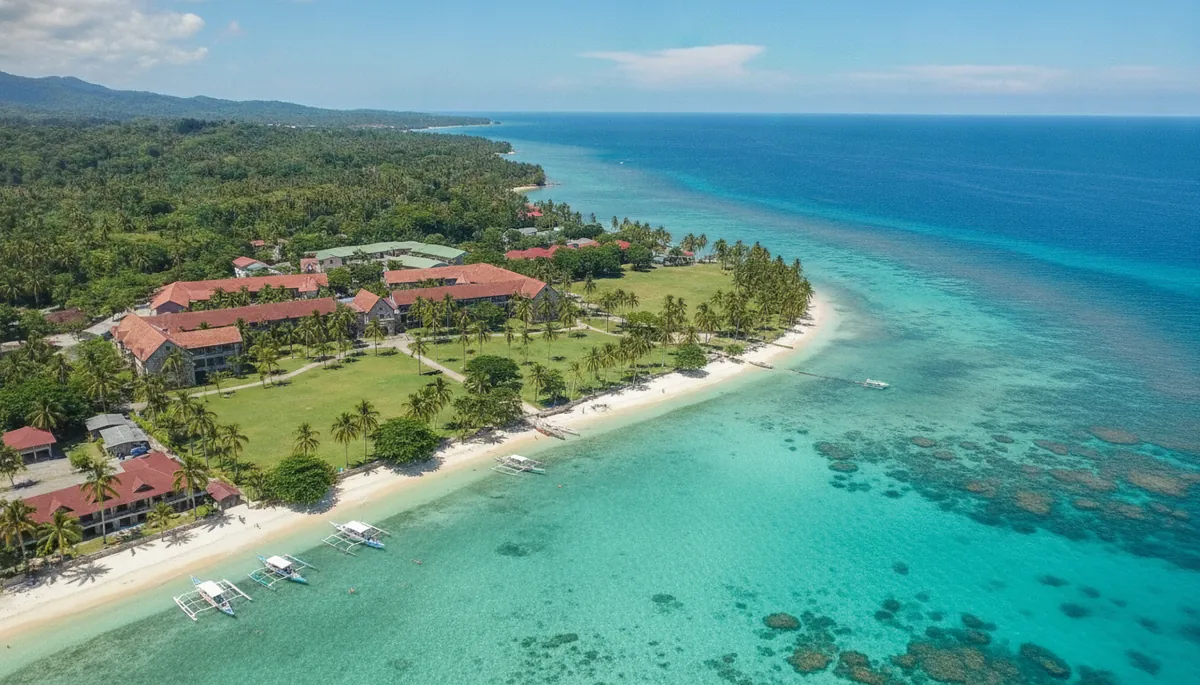
English is an official language of the Philippines, and the local accent is close to standard American English. That means you are surrounded by the language the moment you step off the plane - in shops, cafés and everyday conversation - while paying a fraction of what the same intensity costs in the US, UK or Australia.
Why the Philippines for intensive English?
The Philippines is the world's third-largest English-speaking country, with over 90% of the population conversant in English. Unlike other budget destinations such as Malta or Singapore, the cost of living is drastically lower, which directly lowers your tuition and accommodation costs. A typical all-in package - tuition, private room, three meals daily - runs $900-1,400 per month, roughly $31 per day.
For that price, you receive 4-8 one-to-one lessons per day of 50 minutes each, plus small-group classes and dedicated self-study time. British Council studies show that students need about 200 guided learning hours to move up one CEFR level; here, you typically log 20-25 hours per week in one-to-one instruction alone, so a 4-week term (80-100 hours) often yields visible CEFR progression.
What is the one-to-one academy model?
Most Philippine English schools operate as residential academies: you live, study and eat on campus. This ensures maximum exposure and discipline. Your day might start with breakfast at 7am, four 50-minute one-to-one classes by noon, a group speaking or pronunciation class in the afternoon, and evening self-study or electives like TOEIC or business English.
The intensive one-to-one format is the core advantage. In a week, you get more individual speaking and correction time than a month of group classes in a Western language school. The trainer's entire job is your progress - no waiting for slower classmates, no hiding in the back row. That personalisation is why Chinese, Japanese, Korean, and increasingly European students choose this model for 4-24 week programs.
Cebu vs Baguio: which is right for you?
Cebu & Mactan are the most popular and tourist-friendly. They offer resort-style campuses, a tropical climate, easy weekend diving, island hopping, and a huge range of schools from budget to premium. If you want a balance of study and lifestyle, Cebu is your default.
Baguio, the summer capital of the Philippines at 1,500m altitude, is known for stricter, exam-focused "spartan" academies. These enforce English-only rules, mandatory supervised self-study, curfews, and even penalties for speaking your native tongue. That disciplined environment yields some of the fastest IELTS/TOEFL score improvements but can feel oppressive after a few weeks.
Clark (former US airbase area) and Boracay (though very limited in school count) also have a few academies. In total, around 23 schools operate across Cebu, Mactan, Baguio, and Clark - not dozens as some marketing suggests. That makes an independent shortlist all the more valuable.
Spartan vs relaxed: what study style suits you?
- Spartan academies: English-only policy at all times, mandatory evening self-study (usually 2-3 hours), strict curfews, penalties for missed classes or violating rules. Best for exam candidates on a short, intense sprint (4-12 weeks).
- Semi-spartan / relaxed academies: English-only in class, optional self-study, free evenings and weekends, allowed to leave campus on off days. Better for longer stays (8+ weeks), adult learners, and those who want to enjoy the country while learning.
There is a middle ground: many Cebu schools relaxed by default, while Baguio leans spartan. Choose based on your self-discipline and goal. If you need to go from IELTS 5.5 to 6.5 in 8 weeks, a spartan academy may be the push you need.
How much does it really cost?
Expect to budget roughly $900-1,400 per month for an all-in package (tuition, private room, three meals). That works out to around $31 per day - less than a night in a budget hotel in many countries. The exact price varies with school, room type (single, double, triple), and lesson count (4, 6, or 8 one-to-one classes daily).
Weekdays include three buffet-style meals; weekends, meals are provided but often lighter. You'll pay separately for the SSP study permit (around $100-200, arranged by the school) and later an ACR I-Card (roughly $50-70) if you stay beyond 59 days. Airfare and weekend travel are your own costs. To compare specific packages, see our detailed cost guide.
Do I need a visa or can I just show up?
For language courses under 59 days, you do NOT need a 9(f) student visa - it's not issued for short language programs. A regular tourist visa gives you up to 30 days; you can extend to 59 days easily at a local immigration office. The school will arrange your SSP (Special Study Permit) - costing around $100-200 - within the first week. Those staying longer (common for 2-6 month programs) are issued an ACR I-Card after about 59 days, costing an extra $50-70.
Visa rules change and your school handles the paperwork, but you should budget these as fixed fees. Don't worry about a student visa interview - it's a tourist entry system. Check official Philippine immigration sources or consult an expert like the one at the end of this page for current specifics.
Which schools are best for IELTS or TOEFL?
Only two schools in the Philippines are official IELTS test centres: IDP and British Council have limited partnerships, and most academies send students to these two locations. That doesn't mean only two schools teach IELTS well - most academies offer exam preparation, but only certain ones can host the test on campus. If taking the test on-site is vital, shortlist those two directly.
For TOEFL, more flexibility exists. For Cambridge (B2 First, C1 Advanced) or TOEIC, many schools also have specialised curricula. For general spoken fluency, any academy with 1:1 classes works.
Who can study in the Philippines?
Adults of any age (18+), and some schools accept mature students (over 40) with tailored programs. For children, some academies have kids' groups from age 3-4 during summer or year-round, often paired with a parent who studies while the child attends morning classes. Elsewhere, a 4-week summer camp is a popular choice.
Because of the high one-to-one ratio, even false beginners make substantial progress. Absolute beginners fare fine - trainers use a bilingual bridge (often English plus Korean/Japanese/Chinese) in the first week, depending on the school's demographics.
Can I really learn English in a month?
Yes, but set realistic goals. In 4 weeks, you can expect to move from speaking broken English to holding simple conversations, or raise an IELTS band score by 0.5 to 1.0 if you study intensively. In 8 weeks, most students jump one full CEFR level (e.g., B1 to B2), as one-to-one speaking time is far higher than group classes. For academic proficiency (IELTS 7.0+), plan 12-24 weeks.
The most important factor is your own consistency - attend all classes, speak only English, and use the weekend to practice with locals. The country's English environment reinforces learning naturally. If you're curious about how widespread English is, read our guide to English prevalence in the Philippines.
How to choose the right school?
Start with your budget and study style (spartan vs relaxed), then filter by location (Cebu vs Baguio vs Clark), and finally verify exam prep credentials if needed. Here are concrete steps:
- Step 1: Determine your weekly lesson count and room type - this drives 80% of the price difference.
- Step 2: Choose a city: Cebu for lifestyle, Baguio for discipline, Clark for quieter setting.
- Step 3: Ask for a sample timeline and teaching materials for your level.
- Step 4: Request a video call with the academic manager to assess trainer quality.
- Step 5: Compare your top 3 schools on price, cancellation policy, and start dates.
With our ranking of the best schools, you can see which academies pass our quality benchmarks.
What about daily life and safety?
Living on campus means dorm rules: lights out by 10-11pm in spartan schools; more lenient in relaxed ones. You'll share with international classmates, not locals, so English is the lingua franca. Off campus, use the same street smarts as any big city - keep your phone in your pocket, use official taxis or Grab, and avoid walking alone after midnight.
But the Philippines is generally welcoming. Locals speak English fluently and are famously friendly to foreigners. Weekend island trips (Cebu's Kawasan Falls, Baguio's rice terraces) are safe and cheap. The all-in package means no cooking and no commuting - you focus purely on learning.
If you're planning 12 weeks or more, you'll need a longer tourist visa extension, but schools assist with that as part of the SSP and ACR paperwork.
Is the Philippines better than studying in Australia or Canada?
Studying in Australia or Canada costs $1,500-2,500 per month for a similar intensity, often with group classes only. Here, you get private lessons daily at a third of that price. The trade-offs: no official student visa (so no work rights), a shorter academic history, and a less cosmopolitan experience. But if your goal is English fluency fast, the Philippines is arguably the best value in the world. You can compare costs on our cost breakdown.
Ultimately, choosing a school is more than reading brochures. An expert who has walked the campuses can match you to your ideal environment. The service behind this guide helps you sort through the 23 schools and find the one that fits your learning style and budget.
The best step is to talk to someone who knows each academy personally. For a free, no-obligation consultation and a custom list of three schools suited to your goals, get a free, no-mark-up school match - it costs you nothing, and you pay the school's own price directly.