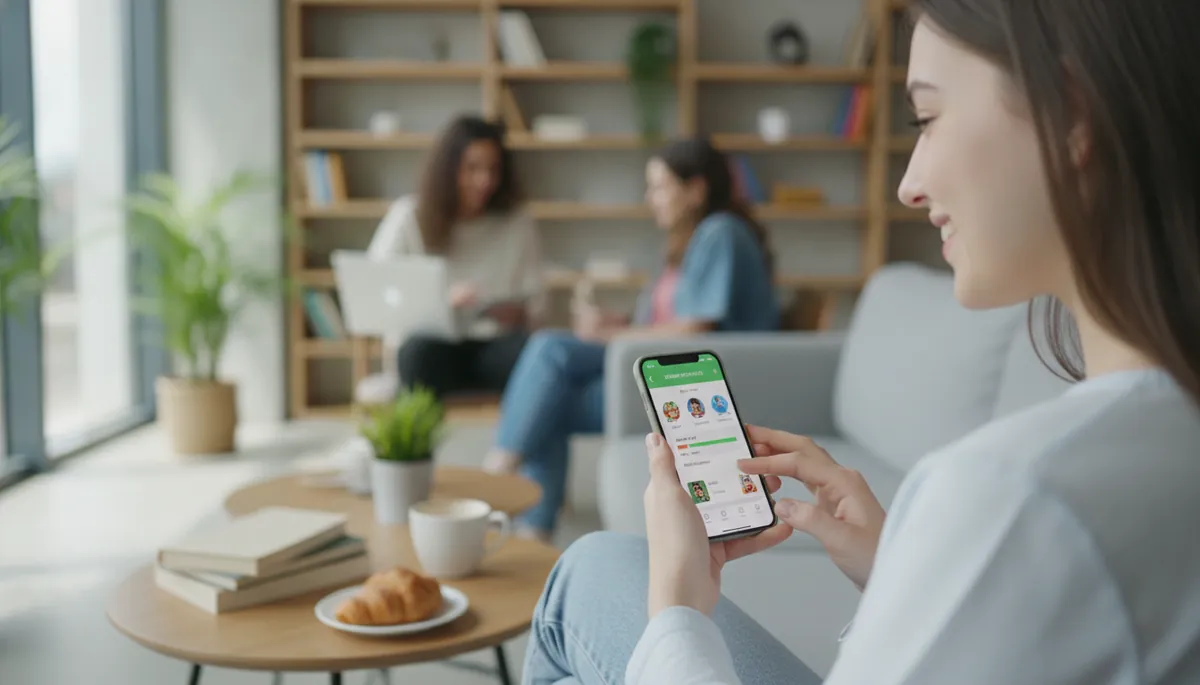
AI has changed how we practise English. Used well, it's a powerful supplement - not a full substitute. If you're wondering whether an AI English tutor can replace a real teacher, the short answer is: not quite. But when you combine the two, you get a fast, flexible and affordable path to fluency. This guide explains what AI tutors are good at, where they fall short, and how to build a smart learning routine - including when to invest in immersion abroad.
What is an AI English tutor?
An AI English tutor is a software tool that uses artificial intelligence to help you learn or improve your English. Popular examples include ChatGPT, Elsa Speak, Duolingo, and dedicated AI conversation apps. They can chat with you, correct your grammar, explain vocabulary, and even give pronunciation feedback. Most work 24/7, so you can practise at 2am or during a lunch break.
The key difference from a human tutor: AI has no real empathy, no sense of your emotions, and no ability to push you when you're lazy. It's a tool - a very smart one - but still a tool.
What AI English tutors are great at
AI tools genuinely shine in several areas, especially for beginners or busy learners. Here are the strongest use cases:
- Daily vocabulary and grammar drills: AI can generate endless exercises tailored to your level, with instant correction and explanation.
- Low-pressure speaking practice: Many learners feel shy speaking to humans. AI is non-judgmental - you can make mistakes freely without embarrassment.
- Instant translations and explanations: Stuck on a phrase? Ask AI to explain grammar or translate, and you get an answer in seconds.
- Pronunciation feedback: Apps like Elsa Speak use speech recognition to point out exactly which sounds you mispronounce.
- Writing help: AI can proofread your emails or essays, suggesting more natural phrasing.
If you're on a budget or just starting, AI can be a solid way to build a base. But don't stop there.
Where AI English tutors fall short
Despite the hype, AI has serious limitations that you should understand before relying on it:
- No real accountability: You have to motivate yourself. There's no teacher to check if you did your homework or push you when you feel like quitting.
- Lacks cultural nuance: English is full of idioms, jokes, and social cues. AI often misses the subtle context that real conversation requires.
- No natural conversation flow: AI can simulate conversation, but it doesn't have genuine interests, emotions, or spontaneity. Real dialogue with a human is different every time.
- Limited feedback on body language: In face-to-face communication, body language and facial expressions matter. AI can't see how you're reacting.
- Risk of incorrect information: AI models can produce plausible-sounding but wrong explanations, especially for advanced grammar or cultural questions.
Most importantly, AI can't give you the pressure that comes from speaking to a real person - the kind that forces you to think fast and build true fluency. That pressure is what makes immersion abroad so effective.
How to combine AI with real practice
If you decide to use AI, do it strategically. Here's a practical plan:
- Daily drills: Spend 15-20 minutes with AI for vocabulary and grammar exercises. Use it as your warm-up.
- Shadowing: Practise pronunciation by repeating after AI-generated audio. Record yourself and compare.
- Write and receive feedback: Write a short paragraph about your day, then ask AI to correct it and explain the errors.
- Ask for alternative phrasings: If you're unsure how to say something, ask AI for three ways to express it - from formal to casual.
- Then speak to humans: Schedule regular speaking sessions with a tutor or a language partner. A platform like italki or a local conversation club works well.
This way, you get the best of both worlds: convenience and personalisation from AI, plus real interaction that builds confidence.
When you need more than AI: immersive courses
AI is excellent for maintenance or extra practice, but if you have a set deadline (like an exam or relocation) or you're stuck at a plateau, consider a structured course. Online lessons with a human tutor are a step up, but even they lack the intensity of full immersion.
That's where choosing an English school abroad becomes relevant. Studying in an English-speaking country forces you to use English all day - in class, at meals, with fellow students. You can't switch to your native language. This is especially true in the Philippines, a popular destination for learners from Asia and beyond.
Why English schools in the Philippines are a smart choice
The Philippines offers a unique combination: it's a native English-speaking country (one of the largest in the world), but with living costs and tuition far lower than in the US, UK, or Australia. All-in packages - including tuition, private room, and three meals a day - typically cost between $900 and $1,400 per month. That's roughly $31 per day for a complete study experience.
Most schools provide 4 to 8 one-to-one lessons per day. That's a huge advantage: individual attention means your strengths and weaknesses are directly targeted, and you get real human feedback every session. You can even use AI tools after class to reinforce what you learned.
See student accommodation in English schools abroad for what living arrangements typically include.
What to look for in a school if you decide to go
Before you book, evaluate schools carefully. Not all are equal. Here's a quick checklist:
- Check the student-to-teacher ratio and the number of one-to-one lessons per day.
- Ask about the national mix of students - more diversity means less temptation to speak your own language.
- Check if the school is an official test centre for IELTS or TOEFL (only two schools in the Philippines are official IELTS test centres).
- Read reviews from real students - see how to read English school reviews for red flags and green lights.
- Verify that the school arranges the SSP (Special Study Permit) - this costs around $100-$200 and is required for courses longer than 30 days.
- Consider the location: There are 23 schools across Cebu, Mactan, Baguio, and Clark, each with a different vibe. Cebu is urban and lively, Baguio is cooler and more laid-back.
Remember, you don't need a student visa for language courses in the Philippines - a tourist visa suffices, and for longer stays the school helps you get an ACR I-Card (around $50-$70) after about 59 days.
How intensive should your course be?
It depends on your goal. If you're preparing for IELTS and need a band score fast, choose a course with 6-8 one-to-one lessons daily plus self-study. If you're learning for travel or everyday confidence, a standard 4 lessons a day is fine.
Keep in mind that more lessons don't always mean better learning. Your brain needs break to absorb. Most optimal is probably 6 lessons a day plus AI drills in the evening.
Takeaway: Use AI as a supplement, not a substitute
AI English tutors are here to stay. They are fantastic for supplementary practice, quick feedback, and building confidence. But they can't replace the accountability, cultural insight, and genuine human connection that come from a real teacher or immersive environment. For serious learners who want rapid progress, the most effective proven path is to combine daily AI practice with a period of full immersion - and the Philippines offers incredible value for that.
If you're thinking about studying abroad, you don't have to navigate the choices alone. Comparing schools is time-consuming and confusing. We've done the groundwork - see our guide on choosing a school. And when you're ready, get a free, no-mark-up school match - we'll help you find the right fit at the school's own price, with no extra fees charged to you.