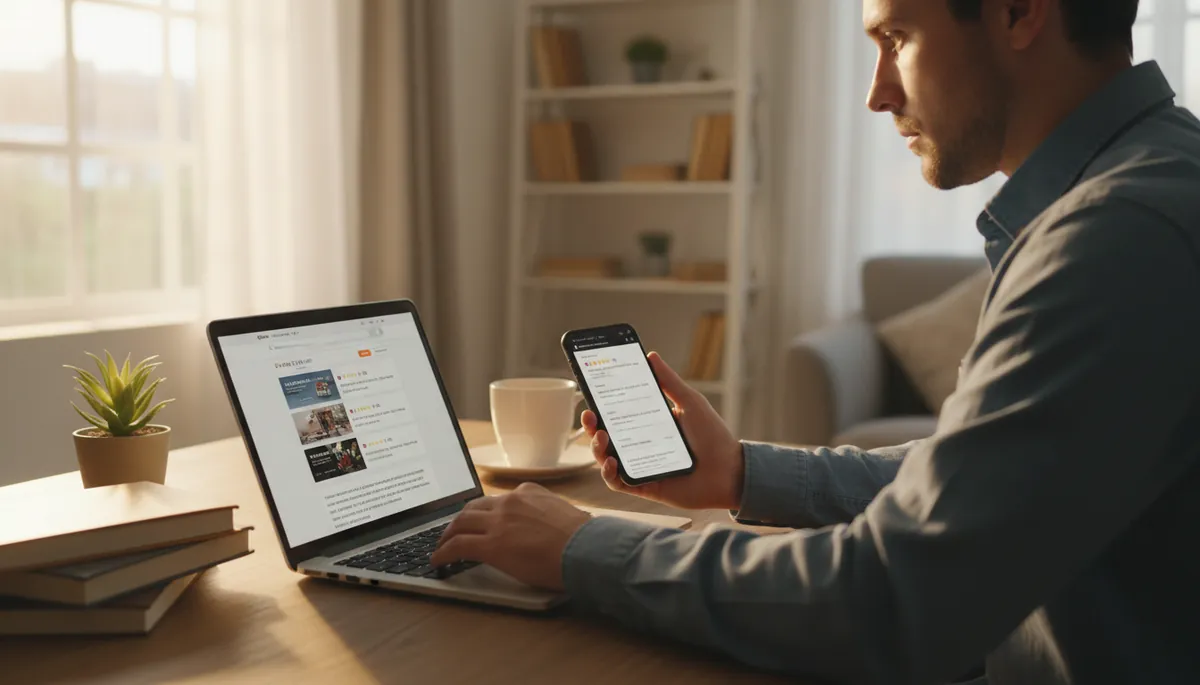
Why Star Ratings Alone Are Misleading
A five-star average tells you little on its own. Many schools, especially in the Philippines, actively solicit reviews from every student, which inflates averages. Others may have only a handful of reviews, making the average statistically meaningless. What matters is the pattern and the specifics.
Look for reviews that mention concrete details: teacher names, lesson structure, the food, the dormitory condition, or how the school handled a visa issue. Generic praise like "great school, highly recommend" is less useful than a review that describes a problem and how it was resolved.
What to Actually Check in a Review
Beyond the star rating, you should evaluate each review on several dimensions. Here is a checklist you can apply to any review you read:
- Recency: Standards change year to year. A review from 2021 may not reflect the current quality of teachers or facilities. Prioritize reviews from the last 6 to 12 months.
- Specificity: Reviews that mention specific teachers, class materials, or the exact number of one-to-one lessons are more credible than vague praise.
- Balance: Be wary of reviews that are 100% positive or 100% negative. Most genuine experiences have both strengths and weaknesses.
- Complaint handling: Look for how the school responded to negative reviews. A thoughtful reply that acknowledges the issue and outlines changes is a positive sign. Ignoring or attacking the reviewer is a red flag.
- Independent sources: Check multiple platforms: Google Maps, Facebook, Reddit forums, and independent review sites. The school's own website will always be biased.
- Video evidence: Video campus tours - the hardest thing to fake - are gold. Look for videos from current students or independent reviewers, not just polished marketing videos.
How to Spot Fake Reviews
Fake reviews are a real problem in the ESL industry. Here are five warning signs:
- Clusters of identical five-star posts: If a school suddenly gets 10 reviews in a week, all saying "great school, best experience of my life," be suspicious.
- Overly promotional language: Reviews that sound like a brochure, with phrases like "exceeds all expectations" and "world-class facilities," are often planted by staff or marketers.
- Account history: If the reviewer has only written one review ever, and it's for this school, that's a red flag.
- Lack of detail: Fake reviews rarely mention specific teachers, lessons, or the food. They stay generic.
- Timing of reviews: Reviews that all come in the same month may be part of a campaign after a bad incident.
Where to Find Genuine Reviews
Not all review platforms are equal. Here is how to rank them:
- Google Maps: Often the most reliable because it's tied to a real location and can be cross-checked with photos.
- Facebook: Useful, but check the profile of the reviewer. Are they real students?
- Reddit and forums: Look for subreddits like r/EnglishLearning or country-specific expat groups. These are less moderated and more honest.
- YouTube: Search for "day in the life of [school name]" or "[school name] vlog." Genuine vlogs are powerful evidence.
- The school's own site: Take these with a large grain of salt. They will only show the best reviews.
How to Evaluate the Pattern of Reviews
Reading one review is like tasting one grape - you need a cluster to judge a whole bunch. Look for consistent themes across many reviews:
- If 80% of reviews praise the teachers but 20% complain about the food, you need to decide if food quality matters to you.
- If many reviews mention that the school is strict about attendance, that's a real policy you should know about.
Also note the overall trend: are reviews getting better or worse over time? A school that used to be great but has declined is different from one that is improving.
Specific Questions to Ask After Reading Reviews
Once you have read a set of reviews, use that information to make a shortlist of your top schools. Then, contact the schools with specific questions based on what you found. For example:
- "One reviewer said the teacher turnover was high. Can you tell me the average tenure of your teachers?"
- "A few reviews mentioned that the food is mostly fried. Are there healthier options?"
This shows you are a serious student, and their responses will be revealing.
Verify with Your Own Eyes
Genuine video walk-throughs and interviews are the strongest proof a campus is real and as described. If you can, arrange a video call with the school and ask for a live tour. Ask to speak to a current student - not a staff member - to get an unfiltered opinion. Cross-check reviews across several platforms and be wary of a wall of identical five-star posts.
If you are considering a school in the Philippines, also look for accreditations and official test center status. For instance, only two schools in the Philippines are official IELTS test centers, which can be a mark of quality. Also, check the school's history with the SSP and ACR I-Card - students often mention these in reviews.
What to Do When Reviews Are Contradictory
Different students have different experiences - that's expected. But if you see sharply conflicting reviews, try to find the source. For example, if one student raves about the strong one-to-one instruction while another says the teachers were often late, look for a pattern over time. If the negative reviews are recent and the positive ones are old, the school may have declined.
Also check if the reviewer's background is similar to yours. A 25-year-old professional will have a different experience than a 14-year-old beginner. Look for reviews from people in your age group and with your learning goals.
Putting It All Together
Before you make a final decision, summarize what you have learned. Create a table for each school with strengths and weaknesses as revealed by reviews. Give more weight to specific, recent, independent reviews. If possible, visit the school in person or through a video call. The best way to get a second opinion is to talk to someone who has been there.
Comparing schools on your own is tough. If you want help, our specialist has visited campuses in person and can give you an honest assessment. The matching service is free for students, and there is no mark-up - you pay the school's own price. Prefer a second opinion from someone who has visited the campuses? Ask our specialist to get a free, no-mark-up school match.
Remember, reviews are a starting point, not the final word. Use them to shortlist schools, then verify with your own eyes. A school that looks amazing on paper can only be judged by the real experience. Cross-reference with accreditation, consider accommodation quality as mentioned in reviews, and go through our full guide on choosing for more tips.