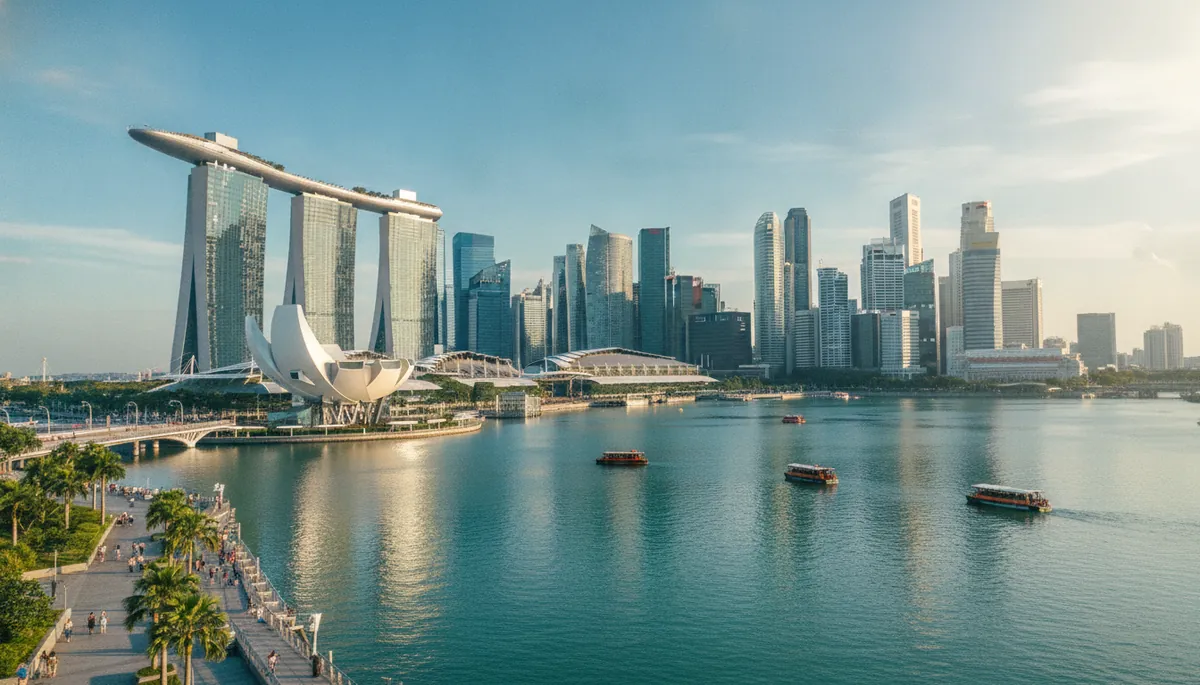
Choosing where to study English in Asia can be overwhelming, but understanding your goals and budget helps narrow down the best destination. This guide compares Singapore, Malaysia, Hong Kong, and the Philippines across key factors like cost, quality, and focus.
What are the main English study destinations in Asia?
Popular hubs include Singapore, Malaysia, Hong Kong, and the Philippines. Each offers a unique mix of quality, cost, and cultural experience. Singapore is known for its high standards and international environment; Malaysia for value and widespread English use; Hong Kong for business and exam preparation; the Philippines for intensive one-to-one lessons at low prices.
Studying English in Singapore: Premium quality, premium price
Singapore is a global education hub with consistently high teaching standards. Choose schools with CPE registration and EduTrust certification to ensure quality. Costs are premium: expect $600-$1,200 per week for intensive courses, with living costs adding another $800-$1,500 monthly. The city-state's multicultural environment offers daily English practice, but the financial commitment is significant.
- Quality assurance: All schools must be registered with CPE and hold EduTrust certification.
- Class structure: Typically 15-20 hours per week in small groups, with fewer one-to-one lessons.
- Living costs: High; accommodation and food can exceed tuition.
Is Malaysia a cheaper alternative with good English learning?
Yes. Malaysia offers strong value: tuition around MYR 700-1,400/week (roughly $150-$300), and low living costs. English is widely spoken, especially in Kuala Lumpur and Penang, making it practical for daily immersion. You'll get more group classes and some private options, but the one-to-one ratio is lower than in the Philippines.
- Affordable living: Rent and food are inexpensive, allowing longer study periods.
- Multicultural exposure: Mix of Malay, Chinese, and Indian cultures, all using English as a bridge.
Why choose Hong Kong for business English?
Hong Kong is a fast-paced financial hub best known for business-English and exam prep like IELTS and TOEFL. You'll learn in an intense, professional environment, but living costs are high (typically $700-$1,500 per week for courses, with rent exceeding $1,000 monthly). If your goal is career advancement in finance or law, Hong Kong's networking opportunities are unmatched.
How does the Philippines compare as a value leader?
The Philippines stands out for the most one-to-one speaking per dollar. Learn about the cost of studying English in the Philippines, but broadly, all-in packages (tuition + private room + 3 meals) range about $900-1,400 per month, roughly $31 per day. You get 4-8 one-to-one lessons daily, which is unprecedented in other Asian hubs. This is ideal for rapid spoken English improvement.
English is one of the official languages in the Philippines, and daily life naturally uses it. Discover the level of English spoken in the Philippines, which eases immersion.
What are the trade-offs of each destination?
- Singapore: High cost, excellent infrastructure, but limited one-to-one practice.
- Malaysia: Low cost, good value, but less intensive speaking practice.
- Hong Kong: Career-focused, but extremely expensive with high pressure.
- Philippines: Intensive speaking practice, low cost, but less urban glamour.
If your priority is budget and spoken fluency, the Philippines offers unbeatable value. For a premium, international experience and are willing to pay more, Singapore is solid. For balanced cost and quality, Malaysia is a smart midpoint.
How do I choose the right school for my needs?
Define your budget, desired class type (group vs. one-to-one), and cultural preferences. Consider your goal: business, exams, or everyday conversation. Research school locations and visit if possible. Comparing schools alone is hard, but matching is free for students, and prices are the school's own with no mark-up. Consulting an independent expert can simplify this.
For maximum speaking practice at low cost, the Philippines academies are hard to beat. They offer 4-8 one-to-one lessons daily, with full board and lodging included. All-in monthly packages run $900-1,400. This value makes them a top choice for serious learners.
Featured: read our guide to the best English schools in the Philippines to see how they structure their programs.
Ready to find your ideal school?
Choosing the right school is a personal decision. Compare programs, check prices, and consider your learning style. If you need guidance, Julia has visited campuses in person and can advise on enrolment and the SSP, ensuring you get unbiased advice. Prices you pay are the school's own with no mark-up.
For the most value in Asia, the Philippines provides an immersive environment with heavy one-to-one teaching. But Singapore, Malaysia, and Hong Kong each have their merits. Weigh your options carefully.
Get a free, no-mark-up school match here to start your journey.